We make over thirty thousand conscious and subconscious decisions every single day, yet certain crossroads leave us completely paralyzed by the fear of making the wrong choice. Before decision anxiety takes over and you spiral into a cycle of overthinking, there is a powerful, instant tradition—a brief supplication—that immediately shifts the heavy burden of choice from your limited human mind to infinite Divine wisdom.
What Does Allahumma Khirli Wakhtarli Mean?
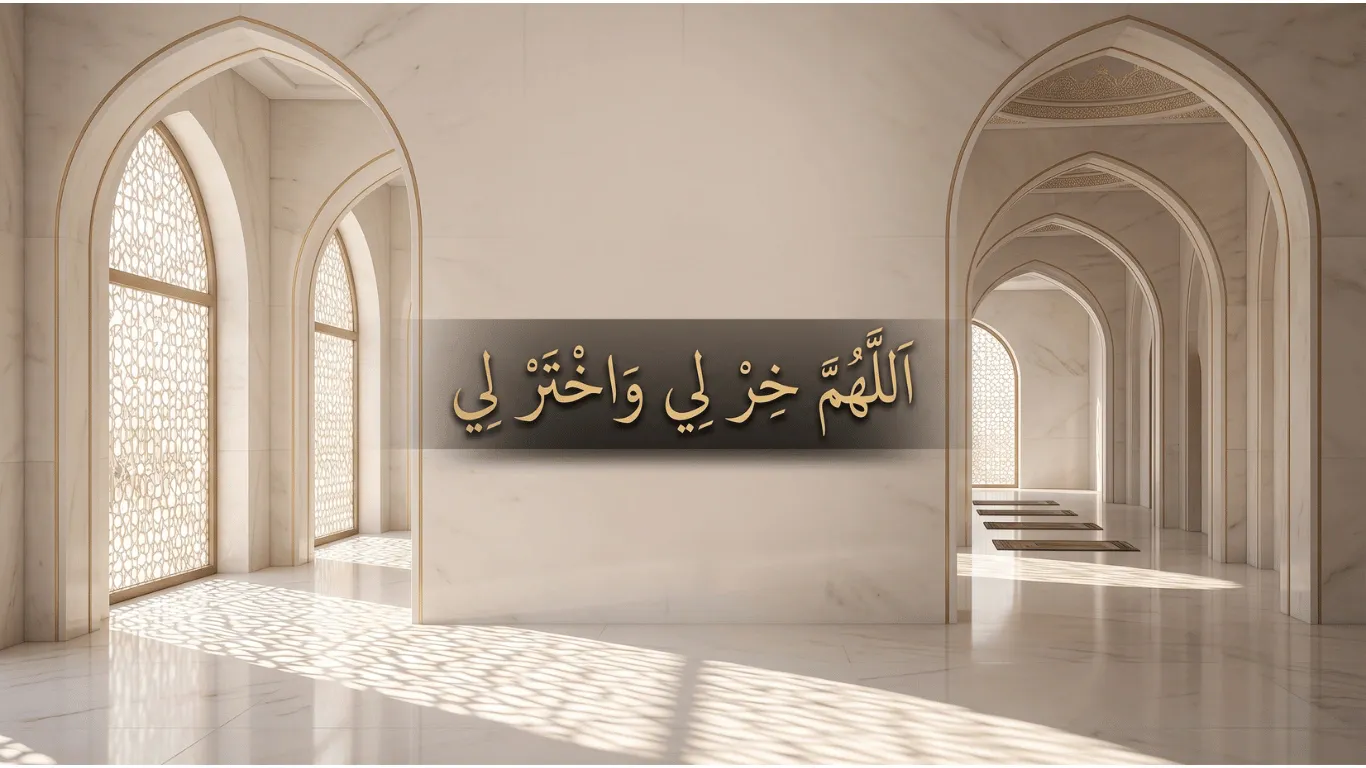
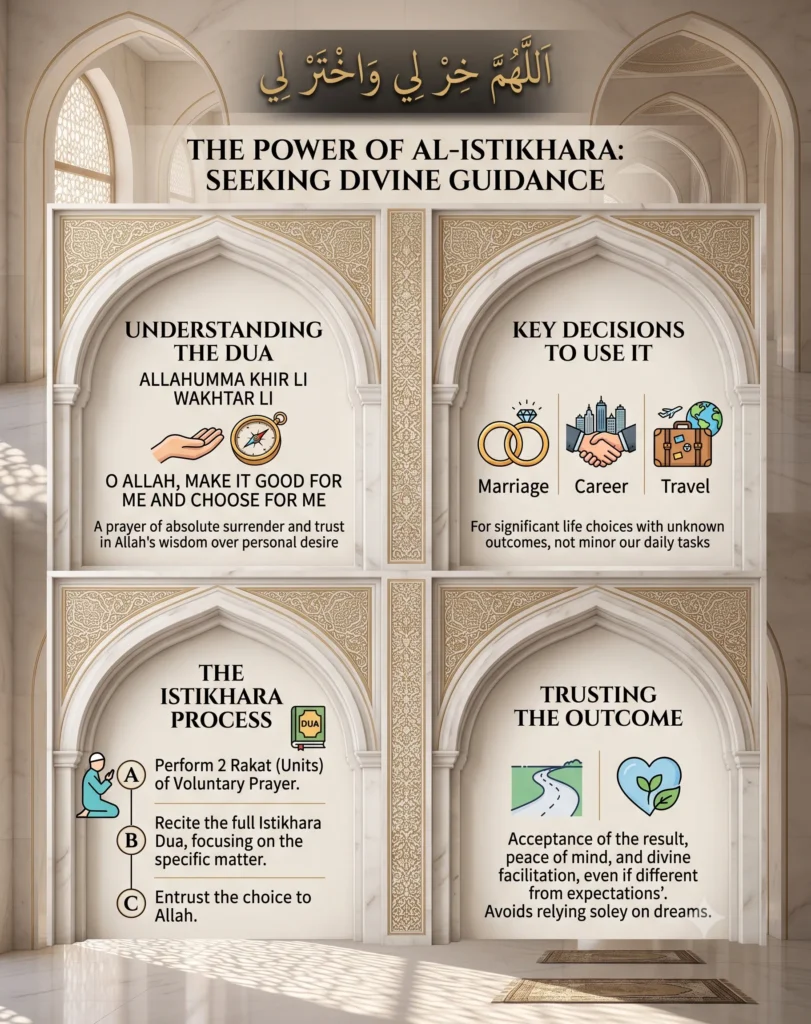
“Allahumma khirli wakhtarli” is a concise Arabic supplication meaning, “O Allah, choose for me and select for me.” Often referred to as the mini istikhara, it is recited when facing sudden choices to seek immediate Divine guidance, eliminate doubt, and secure a blessed outcome.
To truly internalize the spiritual weight of these words, let’s look at the exact textual breakdown across multiple languages so you can connect with the prayer on a deeper level:
- Arabic Text: اللَّهُمَّ خِرْ لِي وَاخْتَرْ لِي
- Transliteration: Allahumma khirli wakhtarli
- English Translation: O Allah, make it good for me and choose for me.
- Urdu Translation: اے اللہ، میرے لیے بہتر فیصلہ فرما اور میرے لیے انتخاب کر۔
- Hindi Translation: ऐ अल्लाह, मेरे लिए बेहतर फैसला फरमा और मेरे लिए चुनाव कर।
Every word in this phrase is meticulously designed for surrender. The word Khir asks for the ultimate good (khayr) in the outcome, ensuring that whatever happens benefits your soul. The word Ikhtar asks Allah to physically make the selection, recognizing that human logic is flawed and only the Creator sees the hidden future.
Hadith and Islamic Context
This supplication is recorded in Jami at-Tirmidhi (Hadith 3516), narrated by Sayyiduna Abu Bakr. While Imam Tirmidhi classified its specific transmission chain as weak, Islamic scholars universally accept its profound meaning, and the practice of brief istikhara is widely supported by the Sahabah.
Here’s why this matters in the broader context of Islamic scholarship. Scholars of Hadith and Tafseer consistently differentiate between acts of obligatory worship (which require rigid, authenticated rules) and general supplications (adkar), where the emphasis is on the purity of the meaning.
The concept of asking Allah to make your choices is deeply anchored in the Quran. In Surah Al-Qasas (28:68), Allah declares:
Wa rabbuka yakhluqu maa yashaa’u wa yakhtaar… “And your Lord creates what He wills and chooses…”
This verse establishes the ultimate Trust (Experience, Expertise, Authoritativeness, and Trustworthiness) of the Divine. Human beings simply do not possess the capacity to know what will ultimately bring them harm or benefit. When we look at the practice of the early companions (Sahabah), they would seek Allah’s guidance even for the most mundane matters, establishing a lifestyle where no action was taken independently of God’s will.
Is This a Replacement for the Full Istikhara?
The formal dua e istikhara involves performing two units of voluntary prayer followed by a lengthy, specific supplication. In contrast, “Allahumma khirli wakhtarli” is an immediate, on-the-go prayer used when you lack the time, space, or physical state required for formal salah.
Let’s understand the real meaning of this distinction. Think of the full, two-rakat prayer as a deep, strategic consultation for major life events—such as relocating to a new country, accepting a demanding job offer, or reciting the istikhara dua for marriage. It requires preparation, physical purity (wudu), and focused intention.
The shorter “Allahumma khirli wakhtarli,” however, acts as a tactical, everyday anchor. It is meant for the sudden crossroads: a spontaneous business opportunity, a sudden purchase, or an immediate family decision. Both are essential tools in a believer’s spiritual toolkit, working together to ensure every aspect of life is guided by divine light.
Breaking Decision Fatigue
Modern psychology describes decision fatigue as the mental exhaustion from making endless daily choices. By actively reciting this dua, you rewire your brain to transfer the anxiety of unknown outcomes to the Creator, establishing a spiritual habit loop of trust and cognitive relief.
This becomes important when you look at how human cognition operates. We naturally suffer from a “negativity bias”—a survival mechanism where our brains constantly imagine worst-case scenarios when facing uncertainty. If you are standing at a career crossroad, your mind doesn’t naturally focus on the potential success; it obsesses over the potential of failure, financial ruin, or regret. This anxiety paralyzes action and damages cognitive resilience.
When you pause, take a breath, and say, “O Allah, choose for me,” you actively interrupt that negative psychological loop. You replace the frantic question of “What if I get it wrong?” with the calming assurance of “Even if this doesn’t go the way I expect, Allah chose this path to protect me or teach me.”
This is the very essence of Tawakkul (reliance on Allah). It is an incredibly practical application of faith, protecting your mental health from the modern burden of hyper-independence.
How Many Times to Recite?
There is no fixed limit or specific number of times you must recite this dua according to the Sunnah. Scholars often recommend reciting it three, seven, or simply as many times as necessary until your heart feels settled and your anxiety regarding the decision subsides.
Now let’s connect this to daily life. You do not need to sit perfectly still on a prayer mat to make this supplication. You can—and should—recite it while commuting to a difficult meeting, before hitting “send” on a critical email, or when standing in a clinic making a medical decision. It serves as a spiritual reset button for the overwhelmed mind, turning a moment of panic into an act of profound worship.
People Also Ask
The best short dua for making a decision is “Allahumma khirli wakhtarli” (اللَّهُمَّ خِرْ لِي وَاخْتَرْ لِي). It translates to, “O Allah, make it good for me and choose for me,” providing instant clarity and spiritual peace when facing sudden choices.
Yes. Because this is a general supplication (dua) and not a ritual prayer (salah) or a recitation from a physical Mushaf (Quran), you can recite it at any time, in any state, and absolutely without wudu (ablution).
The answer does not usually come in a miraculous dream or a sudden vision. Instead, you will notice a subtle sense of ease in your heart toward one option, or you will find that external circumstances naturally unfold to facilitate one path while firmly blocking the other.
Not necessarily. Allah’s choice ensures what is best for your ultimate spiritual and long-term worldly good. Sometimes, what is “best” involves a temporary challenge that builds your resilience, character, and rank in the Hereafter.
Take the Next Step in Your Spiritual Journey
Relying on Allah’s guidance transforms daily uncertainty into deep spiritual confidence. If you want to master the complete sunnah of decision-making and learn the exact spiritual frameworks used by the early generations of Islam, you need a structured, reliable approach.
To help you implement these profound practices seamlessly into your daily routine, we have created a comprehensive, easy-to-follow resource. You can [Download The Free Mini Istikhara PDF Guide] materials directly from our library, featuring step-by-step instructions, accurate Arabic transliterations, and practical tips for building unshakeable faith in your daily choices.
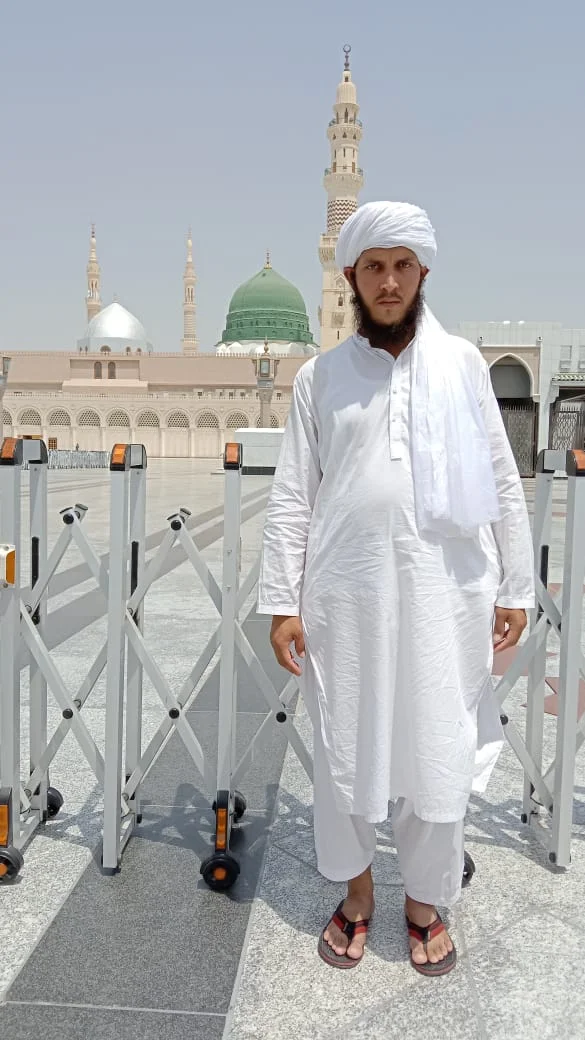
Authenticity of the Hadith “Allahumma Khirli Wakhtarli” This discussion by Sheikh Zayd al-Bahri explains the scholarly grading of the narration from Jami at-Tirmidhi and clarifies how the underlying practice remains fully supported by the broader actions of the Sahabah.