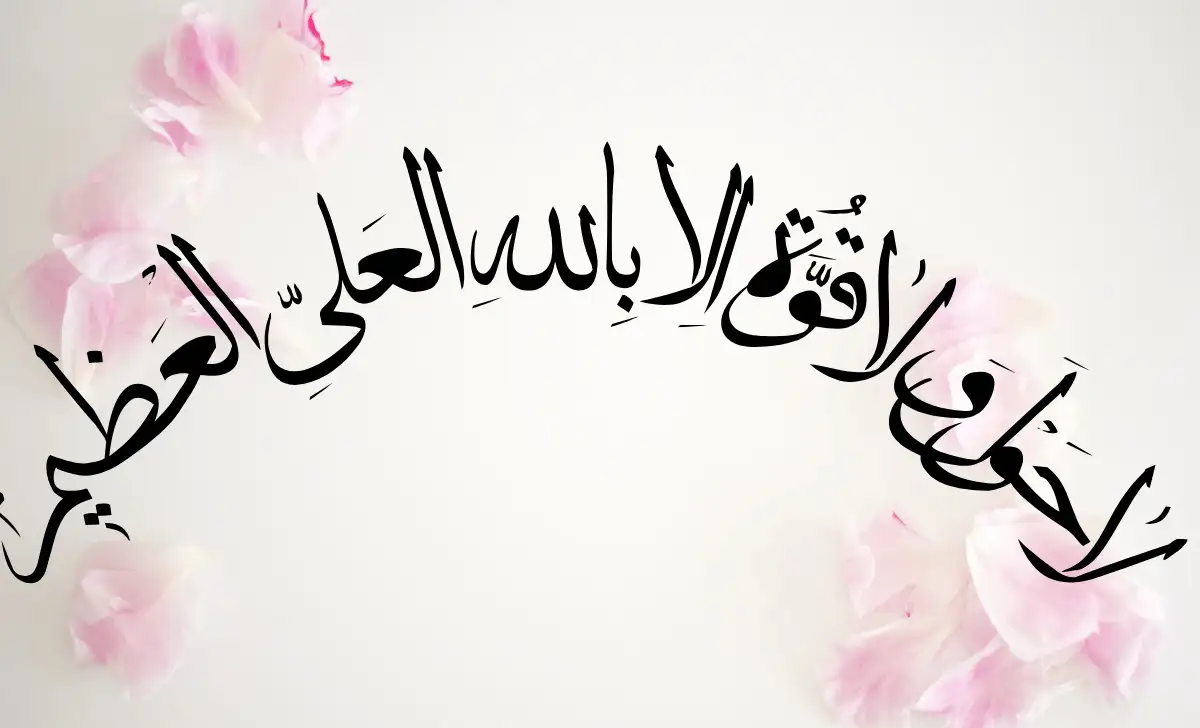
Arabic Text
لَا حَوْلَ وَلَا قُوَّةَ إِلَّا بِاللَّهِ الْعَلِيِّ الْعَظِيمِ
Transliteration
Lā ḥawla wa lā quwwata illā billāhil-‘Aliyyil-‘Aẓīm
Meaning in English
“There is no power to change anything, and no strength to do anything, except with Allah – the Most High, the Most Great.”
This sentence is not a slogan.
It is a worldview.
Meaning in Urdu
“گناہوں سے بچنے کی طاقت اور نیکی کرنے کی قوت صرف اللہ تعالیٰ ہی کی طرف سے ہے، جو سب سے بلند اور سب سے عظیم ہے۔”
Urdu Translation (Word-Based)
لا حول – کوئی طاقت نہیں
ولا قوة – اور نہ کوئی قوت
إلا بالله – مگر اللہ کے ساتھ
العلي العظيم – جو سب سے بلند، سب سے عظیم ہے
Qur’anic Foundation (Complete Verses)
Although the exact phrase is not written word-for-word in the Qur’an, its meaning is firmly rooted in Qur’anic teachings.
📖 Surah Hud (11:88)
Arabic:
وَمَا تَوْفِيقِي إِلَّا بِاللَّهِ
Transliteration:
Wa mā tawfīqī illā billāh
English:
“My success is only by Allah.”
Urdu:
“میری کامیابی صرف اللہ کی طرف سے ہے۔”
📖 Surah Al-Insan (76:30)
Arabic:
وَمَا تَشَاءُونَ إِلَّا أَنْ يَشَاءَ اللَّهُ
Transliteration:
Wa mā tashā’ūna illā an yashā’Allāh
English:
“You do not will except that Allah wills.”
Urdu:
“تم کچھ نہیں چاہ سکتے مگر وہی جو اللہ چاہے۔”
Authentic Hadith
🌿 A Treasure from Jannah
The Prophet ﷺ said:
“Shall I not tell you of a treasure from the treasures of Paradise?
Say: La hawla wa la quwwata illa billah.”
📚 (Bukhari & Muslim)
This hadith alone proves the authority and spiritual weight of this phrase.
La Hawla Wa La Quwwata Illa Billahil ‘Aliyyil ‘Azim Explained in Detail in Urdu (PDF)
Benefits of La Hawla Wa La Quwwata Illa Billahil ‘Aliyyil ‘Azim
🌱 1. Builds Tawakkul (Trust in Allah)
You stop fighting reality and start trusting divine wisdom.
🌱 2. Reduces Anxiety & Overthinking
You accept that control belongs to Allah, not your fears.
🌱 3. Helps Against Sin
Scholars explained:
“No one leaves sin except by Allah’s help.”
🌱 4. Strengthens Patience in Hardship
This dhikr trains the heart to remain calm during tests.
Daily Remembrance After Every Namaz to Ease Anxiety & Inner Restlessness wazifa (200)
In Islam, the heart finds calm not through numbers alone, but through consistent remembrance with awareness. When worries feel heavy, scholars remind us that dhikr reconnects the heart to its true source of peace.
🌿 Recommended Daily Practice (After Every Salah)
After completing each farz namaz, sit calmly for a moment and recite:
لَا حَوْلَ وَلَا قُوَّةَ إِلَّا بِاللَّهِ الْعَلِيِّ الْعَظِيمِ
200 times in total across the day
(You may divide it after each prayer in portions that feel manageable.)
👉 The intention is not curing illness, but:
- Softening the heart
- Releasing inner pressure
- Strengthening reliance on Allah
💭 How This Helps Spiritually
- It reminds you that your struggles are not carried alone
- It reduces the burden of “I must fix everything”
- It replaces panic with surrender and patience
⚠️ Important Balance
Islam teaches that emotional distress should be approached with:
- Dhikr and du‘a
- Patience and reflection
- And professional help when needed
This remembrance is a spiritual support, not a replacement for medical or psychological care.
🌙 Gentle Reflection
Say it slowly.
Let each repetition remind you:
“Allah is stronger than what I am facing.”
With consistency, the heart learns calm — one remembrance at a time.
Wazifa Section (Safe, Authentic & Balanced)
⚠️ Important Note:
This is dhikr, not a magic formula. No numbers. No guarantees.
✔️ How to Practice
- Say it slowly and consciously
- Reflect on your weakness and Allah’s strength
- Best times:
- After salah
- During stress
- When feeling helpless
💡 Heart Reflection
“O Allah, I cannot fix this alone. I trust You.”
This inner surrender is the real power.
🌙 The “Pause & Surrender Method”
Instead of repeating this dhikr rapidly:
- Pause when stress hits
- Take one deep breath
- Say the phrase once, slowly
- Identify what you are trying to control
- Consciously hand it over to Allah
👉 This method shifts the dhikr from tongue-based to heart-based — a practice rarely taught online.
Questions for Deeper Understanding (Self-Reflection)
- Do I say this dhikr only in problems, or also in ease?
- Am I trusting Allah’s power, or just repeating words?
- Which area of my life do I need to surrender today?
These questions create real transformation, not just information.
Final Reflection & Conclusion
La hawla wa la quwwata illa billahil ‘Aliyyil ‘Azim
is not about weakness.
It is about clarity.
When you admit you are limited,
you connect to the One who is unlimited.
Say it when you feel small.
Say it when you feel strong.
Say it until your heart truly believes it.
That is where real peace begins.
People Also Ask
It means that no real strength or ability exists except through Allah.
Its meaning is clearly present, though the exact wording appears in hadith.
During hardship, fear, temptation, or any moment of weakness.
Yes — as dhikr, without fixed numbers or false promises.