Imagine standing at the edge of a roaring, inescapable fire built specifically to destroy you, yet your heart remains completely at peace. You are not panicking. You are not bargaining. You are entirely secure.
This is not a metaphor. It is the exact historical and psychological reality of Prophet Ibrahim (AS) when he faced the tyrant King Nimrod. The secret to his unbreakable calmness lies in a single divine command that bypassed the laws of physics: Surah Al-Anbiya Ayat 69.
Today, millions of people face their own modern “fires”—crippling anxiety, physical illness, and overwhelming stress. Let’s understand the real meaning of this powerful verse and how it provides a timeless framework for cognitive resilience, physical healing, and spiritual relief.
What is the Meaning of Surah Al Anbiya Ayat 69?
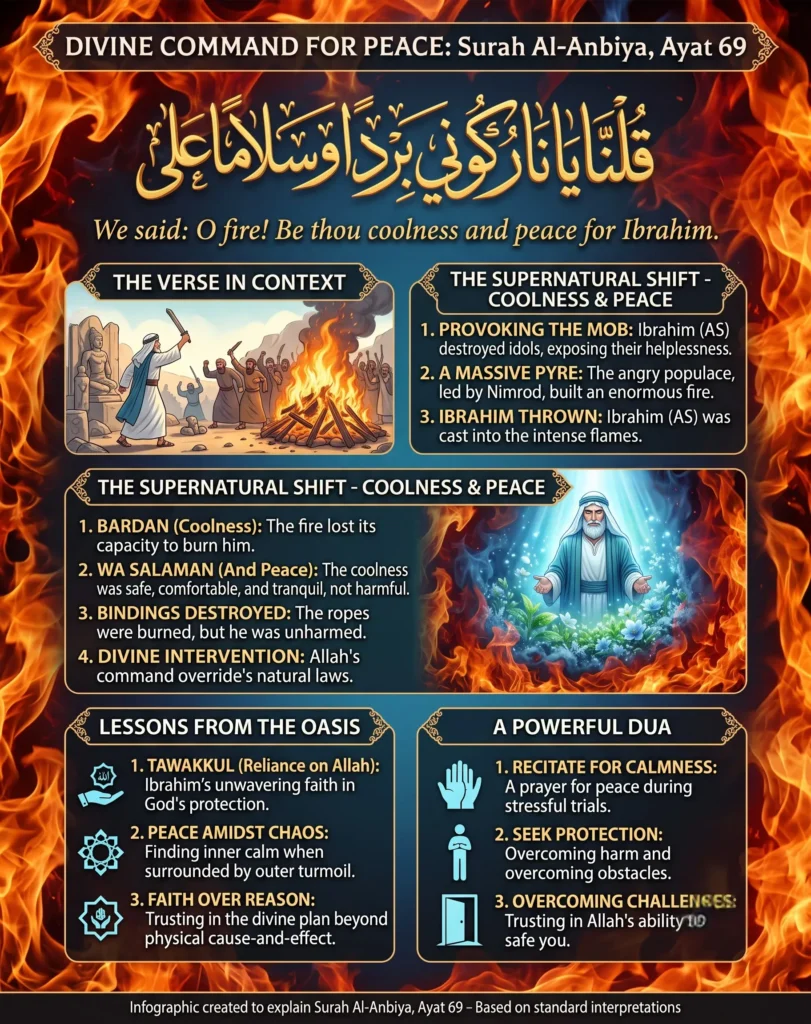
Surah Al-Anbiya Ayat 69 means that Allah commanded the blazing fire to become completely cool and safe for Prophet Ibrahim. It demonstrates that the laws of nature, like fire burning, only work by Allah’s permission, and He can suspend them to protect a true believer.
Arabic Text, Transliteration, and Translations
For readers looking to memorize or understand the exact wording, below is the complete text of Surah Al Anbiya Ayat 69 in Arabic, alongside its English transliteration and accurate meanings in multiple languages.
Multilingual Proof Format
- Arabic Text: قُلْنَا يَا نَارُ كُونِي بَرْدًا وَسَلَامًا عَلَىٰ إِبْرَاهِيمَ
- Transliteration: Qulna ya naru kooni bardan wa salaman ‘ala Ibrahim.
- English Translation: We said, “O fire, be coolness and safety upon Abraham.”
- Urdu Translation: ہم نے کہا اے آگ! ابراہیم پر ٹھنڈی اور سلامتی والی ہو جا۔
- Hindi Translation: हमने कहा, “ऐ आग! इब्राहीम पर ठंडी और शान्तिदायक हो जा।”
Here’s why this matters. Classical scholars like Ibn Kathir emphasize the precision of the words bardan (coolness) and salaman (safety). If Allah had only said “be cool,” the freezing temperature would have harmed Ibrahim. By pairing it with “safety,” the fire became a peaceful, protective sanctuary.
The Cognitive Resilience Framework: Facing Modern Nimrods
Cognitive resilience in Islam means anchoring your mind to the Creator rather than the crisis. Prophet Ibrahim survived Nimrod’s fire not by fighting the flames, but by maintaining absolute trust (Tawakkul) in Allah, neutralizing the psychological terror before the physical miracle occurred.
When King Nimrod constructed a massive fire to execute Ibrahim, the psychological warfare was meant to break the Prophet’s mind before destroying his body. But Ibrahim operated on a superior mental framework.
According to a profound Hadith recorded in Sahih Al-Bukhari, Ibn Abbas (RA) stated that the last words spoken by Prophet Ibrahim as he was being thrown through the air into the fire were: “Hasbunallah wa ni’mal wakeel” (Allah is sufficient for us, and He is the best Disposer of affairs).
This becomes important when you look at modern anxiety. Anxiety is essentially a fire in the mind—a cycle of overthinking, panic, and fear of the future. Ibrahim’s resilience teaches us that you do not always have to put out the fire yourself. By completely transferring your reliance to Allah, He changes the nature of the fire. The situation causing you panic can remain, but it will lose its power to burn your peace of mind.
Ya Naru Kuni Bardan Wa Salaman as a Dua for Fever
Reciting “Ya naru kuni bardan wa salaman” is a well-known spiritual wazifa (practice) for fever. Because the verse commands the literal element of heat to become cool and safe, believers recite it over water to ask Allah to cool the burning temperature of a sick person.
When dealing with physical illness, the Islamic tradition of Ruqyah (spiritual healing) often utilizes verses directly related to the cure. Since a high fever is an internal physical fire, righteous scholars and spiritual practitioners have historically advised reciting this ayat.
How to perform the Wazifa for Fever:
- Perform Wudu (ablution).
- Begin by reciting the Darood Sharif text in Arabic 3 times to invite blessings.
- Recite Qulna ya naru kooni bardan wa salaman ‘ala Ibrahim 7 or 11 times.
- Blow gently over a glass of pure drinking water.
- Give the water to the sick person to drink, trusting that the Same Creator who cooled the fire of Babylon can cool the fever in the body.
Ya Naru Kuni Dua for Weight Loss
While the verse is not a magical weight-loss spell, reciting “Ya naru kuni” helps believers control the “fire” of their unhealthy cravings and ego (Nafs). It provides the psychological discipline and spiritual calmness needed to commit to a healthy, balanced lifestyle.
Now let’s connect this to daily life and personal development. Many users search for a Ya naru kuni dua for weight loss. In Islamic psychology, unchecked desires, binge eating, and lack of discipline are fueled by the heat of the Nafs (the lower self).
By integrating this verse into your daily spiritual habit loop, you are asking Allah to cool down the intense urges of your ego. When your mind is at peace—rather than stressed and seeking emotional comfort in food—your body naturally follows. You shift from a state of impulsive consumption to a state of mindful gratitude, recognizing the perfection of your body and acknowledging the ultimate truth of Fabiayyi ala irobbikuma tukadziban (So which of the favors of your Lord would you deny?).
People Also Ask
For general anxiety or fear, recite it 33 or 100 times daily after your obligatory prayers. For specific physical ailments like a fever, reciting it 7 or 11 times over water is a common and effective scholarly practice.
The verse originates from Surah Al-Anbiya (The Prophets), Chapter 21, Verse 69 of the Holy Quran. It documents the historical moment Allah saved Prophet Ibrahim from the idolaters of Babylon.
Yes, spiritually. A panic attack feels like a sudden emotional fire. Reciting this verse slowly forces your breathing to regulate while reminding your brain that Allah controls the situation. It shifts your mental state from panic to absolute safety.
A Final Word on Finding Your Peace
Every single one of us will face a “fire” in this lifetime. It might be a health crisis, a toxic workplace, financial ruin, or the invisible flames of depression. The story of Prophet Ibrahim is not just a historical event; it is a live, operating manual for surviving trauma. When you stop fearing the flames and start trusting the One who controls the heat, your hardest trials will become your safest sanctuaries.
If this explanation brought peace to your heart today, please share this post with someone who might be silently fighting their own fire right now. A single share could be the spiritual relief they have been praying for.