For centuries, South Asian Islamic literature has been enriched by the tradition of Naat-e-Rasool-e-Maqbool (poetry praising the Prophet Muhammad ﷺ). Within this vast ocean of devotional literature, certain pieces resonate so profoundly that they transcend the boundaries of mere poetry to become anthems of collective spiritual yearning. “Ab To Bas Ek Hi Dhun Hai” is one such masterpiece.
This article explores the thematic depth, psychological resonance, and spiritual symbolism of this beloved Naat, dissecting why it continues to move millions of believers around the world.
The Psychology of Dhun: The Singular Spiritual Frequency
To understand the core of this Naat, one must first deconstruct its titular phrase: “Ab to bas ek hi dhun hai” (Now, there is but one obsession).
In modern, everyday language, a dhun is a melody or a tune. However, in the context of Urdu poetry and Sufi tradition, dhun implies a state of unwavering, rhythmic obsession. It is the psychological state where the mind is completely hijacked by a singular thought, muting the cacophony of worldly ambitions, materialistic desires, and daily anxieties.
- Detachment from the Dunya (World): The word “Ab” (Now) is crucial. It suggests a turning point or an awakening. The poet has reached a stage in life—perhaps through age, realization, or divine grace—where everything else has lost its appeal.
- The Rhythmic Heartbeat: A dhun repeats. This mirrors the Islamic practice of Dhikr (remembrance). The longing for Madina is not a passing thought; it is the continuous rhythm to which the poet’s heart beats.
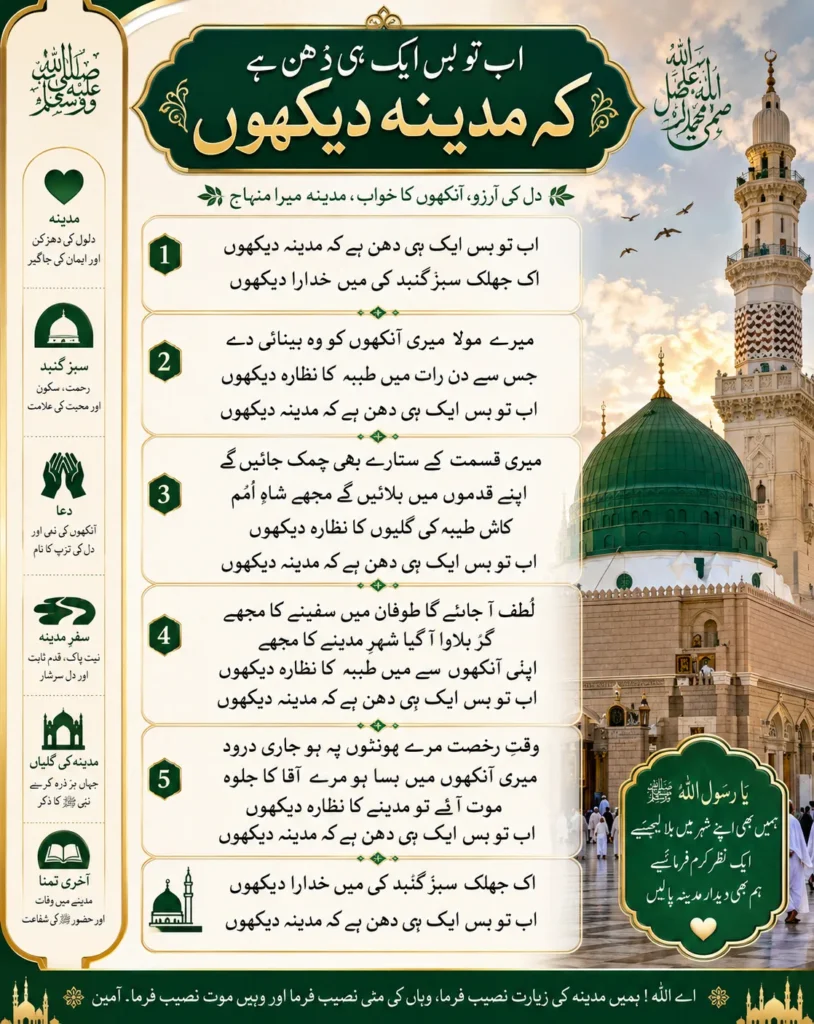
We’ve designed this comprehensive infographic so you can easily read, save, and share the profound verses of this beautiful Naat. Each verse takes you on a spiritual journey of love, longing, and devotion to the Prophet ﷺ.
📥 Save this image to your phone or share it to spread the love of Madina! ✨ #NaatShareef #UrduNaat #IslamicInfographic #IshqeRasool #AbToBasEkHiDhunHai
اب تو بس ایک ہی دھن ہے کہ مدینہ دیکھوں اک جھلک سبز گنبد کی میں خدارا دیکھوں
میرے مولا میری آنکھوں کو وہ بینائی دے جس سے دن رات میں طیبہ کا نظارہ دیکھوں اب تو بس ایک ہی دھن ہے کہ مدینہ دیکھوں
میری قسمت کے ستارے بھی چمک جائیں گے اپنے قدموں میں بلائیں گے مجھے شاہِ اُمم کاش طیبہ کی گلیوں کا نظارہ دیکھوں اب تو بس ایک ہی دھن ہے کہ مدینہ دیکھوں
لُطف آ جائے گا طوفان میں سفینے کا مجھے گر بلاوا آ گیا شہرِ مدینے کا مجھے اپنی آنکھوں سے میں طیبہ کا نظارہ دیکھوں اب تو بس ایک ہی دھن ہے کہ مدینہ دیکھوں
وقتِ رخصت مرے ہونٹوں پہ ہو جاری درود میری آنکھوں میں بسا ہو مرے آقا کا جلوہ موت آئے تو مدینے کا نظارہ دیکھوں اب تو بس ایک ہی دھن ہے کہ مدینہ دیکھوں
اک جھلک سبز گنبد کی میں خدارا دیکھوں اب تو بس ایک ہی دھن ہے کہ مدینہ دیکھوں
Key Symbolism and Motifs in the Lyrics
The Naat employs classic Eastern poetic motifs, elevating them with intense emotional vulnerability.
1. The Visual Anchor: Sabz Gumbad (The Green Dome)
“Ik jhalak sabz gumbad ki main khudara dekhun” (For God’s sake, let me catch just one glimpse of the Green Dome)
The Green Dome over the Prophet’s resting place in Masjid-e-Nabawi is the ultimate visual archetype of peace in Islamic culture. The poet does not ask for riches, health, or even to reside in Madina forever. The plea is agonizingly modest: an ik jhalak (a single, fleeting glimpse). This highlights the believer’s immense humility, feeling unworthy of staying, yet desperate for the visual remedy that the dome provides to a restless soul.
2. The Metaphor of the Storm and the Ship
“Lutf aa jaye ga toofan mein safinay ka mujhe / Gar bulawa aa gaya shehar-e-Madinay ka mujhe” (I would find joy even in a ship caught in a storm / If only an invitation arrives from the city of Madina)
Here, the poet uses the universal metaphor of a toofan (storm) and a safina (ship/boat) to represent the trials of worldly life. Human existence is often fraught with emotional, financial, and spiritual turbulence. The poet asserts that all worldly suffering becomes bearable—even joyful—if the ultimate destination is Madina. The “invitation” (bulawa) signifies that one cannot simply visit the holy city through wealth or resources; one goes only when called by divine decree.
3. Husn-e-Khatima: The Beautiful End
“Waqt-e-rukhsat mere honton pe ho jari durood / Maut aaye to Madinay ka nazara dekhun” (At the time of departure, may salutations be on my lips / When death approaches, may I be seeing the sight of Madina)
In Islamic theology, a “good end” (Husn-e-Khatima) is paramount. How one leaves this world is considered the ultimate test of their faith. This verse shifts the Naat from a geographical longing to a highly spiritual, eschatological prayer. The poet desires their final cognitive acts to be tied to the Prophet ﷺ—their lips reciting Durood (blessings), and their fading vision locked onto the sanctuary of Madina.
The Universal Appeal of the Anthem
Why does “Ab To Bas Ek Hi Dhun Hai” echo in grand mosques, small village gatherings, and modern digital platforms alike?
- Simplicity of Language: Unlike highly Persianized Urdu poetry (such as the works of Mirza Ghalib or even some of Ala Hazrat’s complex Kalam), this Naat uses accessible, deeply emotional vocabulary.
- A Shared Vulnerability: Every practicing Muslim feels a sense of inadequacy regarding their faith. This Naat gives voice to that inadequacy. It acknowledges the distance—both physical and spiritual—between the flawed believer and the perfect role model (the Prophet ﷺ).
- The Catharsis of Tears: The poetry is designed to evoke tears (chashm-e-purnam). In the Sufi tradition, tears shed in the love of the Divine or His Prophet are considered a form of spiritual purification, washing away the rust of the heart.
Conclusion
“Ab To Bas Ek Hi Dhun Hai” is not just a poem; it is an emotional roadmap of the believer’s journey. It moves from the acknowledgment of inner emptiness to the desperate plea for a visual connection, braving the storms of life, and ultimately culminating in the prayer for a peaceful, blessed departure from this world. It stands as a timeless testament to Ishq-e-Rasool, proving that true love is measured not by proximity, but by the intensity of the longing.
Which specific metaphor or verse from this deep tradition of Naat poetry resonates the most with your personal spiritual perspectives?