Have you ever felt powerless, like everything is slipping from your hands – money, status, job, respect, even relationships?
In those moments, this Qur’anic dua:
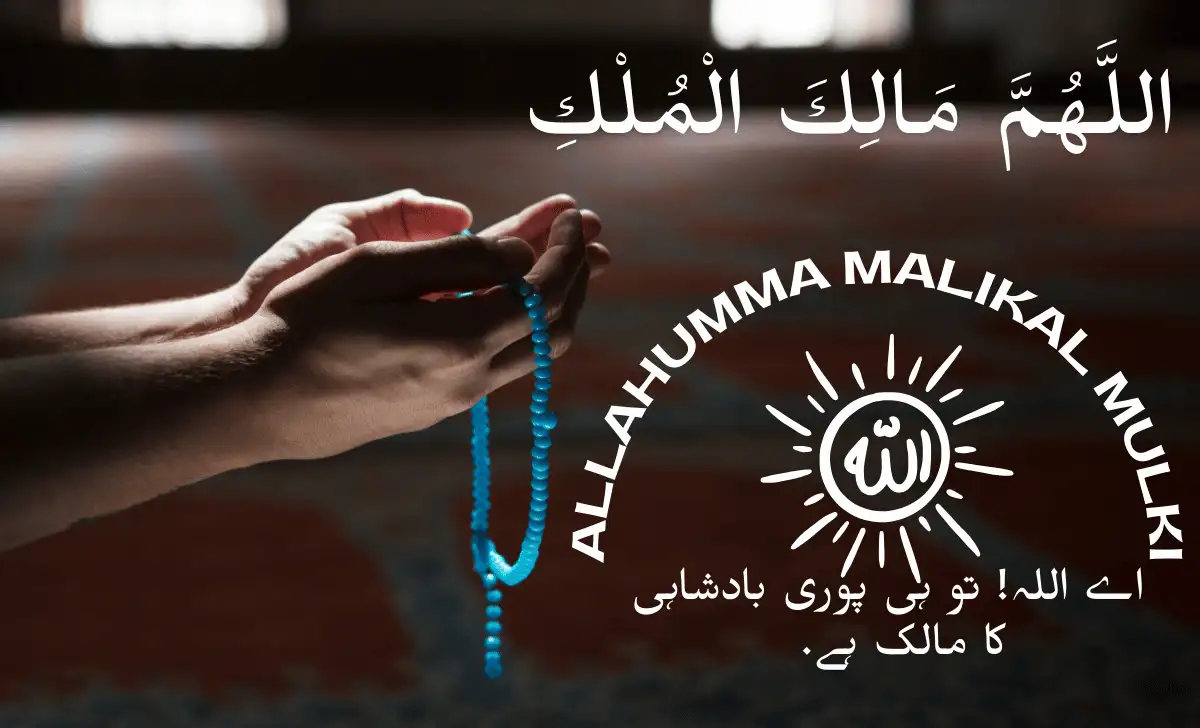
اللَّهُمَّ مَالِكَ الْمُلْكِ – Allahumma Mālika al-Mulk(i)
comes like a spiritual reset button.
This article will walk you, in simple English and Urdu, through:
- Meaning and tafsir of “Allahumma malikal mulki”
- The full Qur’anic verses (3:26–27) in Arabic, transliteration, Urdu, and English
- A powerful Prophetic dua for debts that expands this verse
- How to recite it for rizq, honor, anxiety, and life changes
- FAQs like:
- “Can I read allahumma malikal mulki for debt?”
- “How many times should I recite it?”
What Does “Allahumma Malikal Mulki” Mean?
Arabic Phrase
اللَّهُمَّ مَالِكَ الْمُلْكِ
Transliteration:
Allahumma Mālika al-Mulk(i)
Simple English meaning:
“O Allah, Owner of all kingdom and power.”
Simple Urdu meaning:
“اے اللہ! تو ہی پوری بادشاہی کا مالک ہے۔”
- Allahumma – “O Allah,” a way of calling upon Him with closeness and humility.
- Mālika – the absolute Owner / King / Master.
- al-Mulk – the kingdom, power, authority, dominion over everything in this world and the next.
When we say “Allahumma malikal mulki”, we are admitting:
- Any job, position, government, respect, wealth, followers someone has – it’s temporary and on loan from Allah.
- Any loss, demotion, humiliation or downfall also happens only by His permission and wisdom.
The Qur’anic Source: Surah Aal-Imran 3:26–27
These words are part of Surah Aal-Imran, verses 26–27.
Verse 3:26 – “Allahumma Malikal Mulki”
Arabic:
قُلِ اللَّهُمَّ مَالِكَ الْمُلْكِ تُؤْتِي الْمُلْكَ مَن تَشَاءُ
وَتَنزِعُ الْمُلْكَ مِمَّن تَشَاءُ
وَتُعِزُّ مَن تَشَاءُ وَتُذِلُّ مَن تَشَاءُ
بِيَدِكَ الْخَيْرُ
إِنَّكَ عَلَىٰ كُلِّ شَيْءٍ قَدِيرٌ
Transliteration (line by line):
Qulillāhumma Mālika al-Mulki tuʾti al-mulka man tashāʾu
wa tanziʿu al-mulka mimman tashāʾ
wa tuʿizzu man tashāʾu wa tu dhillu man tashāʾ
biyadika al-khayr
innaka ʿalā kulli shayʾin qadīr
Simple English translation:
Say: “O Allah, Owner of all dominion,
You grant power to whom You will and You take it away from whom You will.
You honor whom You will and You humble whom You will.
All good is in Your hand.
Surely, You have power over everything.”
Urdu translation:
کہہ دیجیے: “اے اللہ! بادشاہی کے مالک!
تو جسے چاہے حکومت دیتا ہے اور جس سے چاہے حکومت چھین لیتا ہے۔
جسے چاہے عزت دیتا ہے اور جسے چاہے ذلت میں گرا دیتا ہے۔
ہر خیر تیرے ہی ہاتھ میں ہے،
بے شک تو ہر چیز پر پوری قدرت رکھنے والا ہے۔”
Verse 3:27 – Allah’s Control Over Rizq and Change
Right after that, Allah describes how He changes day and night, life and death, poverty and wealth.
Arabic:
تُولِجُ اللَّيْلَ فِي النَّهَارِ وَتُولِجُ النَّهَارَ فِي اللَّيْلِ
وَتُخْرِجُ الْحَيَّ مِنَ الْمَيِّتِ وَتُخْرِجُ الْمَيِّتَ مِنَ الْحَيِّ
وَتَرْزُقُ مَن تَشَاءُ بِغَيْرِ حِسَابٍ
Transliteration:
Tūlijul-layla fin-nahāri wa tūliju an-nahāra fil-layl
wa tukhrijul-ḥayya minal-mayyiti wa tukhrijul-mayyita minal-ḥayy
wa tarzuqu man tashāʾu bighayri ḥisāb
Simple English meaning:
You cause the night to enter into the day and the day to enter into the night.
You bring the living out of the dead and the dead out of the living.
And You provide whoever You will, without measure.
Simple Urdu meaning:
تو رات کو دن میں داخل کرتا ہے اور دن کو رات میں داخل کرتا ہے۔
تو زندہ کو مردہ سے نکالتا ہے اور مردہ کو زندہ سے نکالتا ہے۔
اور تو جسے چاہے بے حساب رزق دیتا ہے۔
Together, 3:26–27 teach:
- Power changes.
- Wealth changes.
- Respect changes.
- But the Hand that changes everything never changes.
Tafsir & Background: What Are Scholars Saying?
Classical scholars like Ibn Kathir, Ibn ‘Abbas, and Maududi explain these verses with a few key themes:
- All sovereignty belongs to Allah
- Kingdoms like Persia and Byzantium, and any modern superpower, exist only as long as Allah allows.
- Encouraging gratitude and tawakkul
- Allah tells the Prophet ﷺ to say this while praising, thanking, and relying upon Him.
- Comfort for believers
- When Muslims see disbelievers in power, these ayāt remind them that today’s king can be tomorrow’s prisoner, and Allah’s wisdom unfolds in time.
- Power and humiliation are tests
- Honor (ʿizzah) is not a proof of being beloved; sometimes Allah gives power as a test, not as a gift.
So, when you recite “Allahumma malikal mulki…”, you are not just reading a pretty phrase.
You are joining the Prophet ﷺ in a Qur’anic declaration of tawḥīd and tawakkul.
Word-by-Word: Feel the Depth of the Dua
Let’s break the core part in simple language:
- اللَّهُمَّ (Allahumma) – “O Allah” – intimate calling, like turning fully towards Him.
- مَالِكَ الْمُلْكِ (Mālika al-Mulk) – Owner of all dominion:
- Owner of governments, companies, armies, families, hearts, followers.
- تُؤْتِي الْمُلْكَ مَن تَشَاءُ (tuʾti al-mulka man tashāʾ)
- You give power, influence, wealth, authority to whomever You will.
- وَتَنزِعُ الْمُلْكَ مِمَّن تَشَاءُ (wa tanziʿu al-mulka mimman tashāʾ)
- You tear away kingdom from whom You will – sometimes suddenly, sometimes slowly.
- وَتُعِزُّ مَن تَشَاءُ (wa tuʿizzu man tashāʾ)
- You honor – with faith, dignity, stability, respect, inner peace.
- وَتُذِلُّ مَن تَشَاءُ (wa tu dhillu man tashāʾ)
- You lower – outwardly or inwardly; even a rich person can live humiliated.
- بِيَدِكَ الْخَيْرُ (biyadika al-khayr)
- All true good is in Your Hand alone.
- إِنَّكَ عَلَىٰ كُلِّ شَيْءٍ قَدِيرٌ (innaka ʿalā kulli shayʾin qadīr)
- You are fully capable over everything.
When we repeat this, we are shifting the center of our life:
From “My boss, my exam, my contacts control my future”
to “My Rabb controls everything, and I am safe under Him.”
The Extended Prophetic Dua with “Allahumma Malikal Mulki” (For Debts)
There is a famous dua for debts which includes these words. Anas ibn Malik (ra) narrates that the Prophet ﷺ taught Mu‘adh (ra) a dua which, if recited even with a debt as large as Mount Uhud, Allah would clear it.
Full Arabic Text
اللَّهُمَّ مَالِكَ الْمُلْكِ تُؤْتِي الْمُلْكَ مَن تَشَاءُ،
وَتَنزِعُ الْمُلْكَ مِمَّن تَشَاءُ،
وَتُعِزُّ مَن تَشَاءُ، وَتُذِلُّ مَن تَشَاءُ،
بِيَدِكَ الْخَيْرُ، إِنَّكَ عَلَىٰ كُلِّ شَيْءٍ قَدِيرٌ.
رَحْمٰنَ الدُّنْيَا وَالْآخِرَةِ وَرَحِيمَهُمَا،
تُعْطِيهِمَا مَن تَشَاءُ، وَتَمْنَعُ مِنْهُمَا مَن تَشَاءُ،
ارْحَمْنِي رَحْمَةً تُغْنِينِي بِهَا عَنْ رَحْمَةِ مَنْ سِوَاكَ.
Transliteration
Allahumma Mālikal-mulki tuʾtil-mulka man tashāʾ,
wa tanziʿul-mulka mimman tashāʾ,
wa tuʿizzu man tashāʾ, wa tu dhillu man tashāʾ,
biyadikal-khayr, innaka ʿalā kulli shayʾin qadīr.
Raḥmānad-dunyā wal-ākhirah wa raḥīmahumā,
tuʿṭīhimā man tashāʾ, wa tamnaʿu minhumā man tashāʾ,
irḥamnī raḥmatan tughnīnī bihā ʿan raḥmati man siwāk.
Simple English Meaning
O Allah, Owner of all dominion,
You give power to whom You will and You take it from whom You will.
You honor whom You will and You humble whom You will.
All good is in Your Hand. Surely You have power over everything.
Most Merciful of this world and the Hereafter and their Compassionate One,
You give them (both) to whom You will and You withhold them from whom You will.
Have mercy on me with a mercy that makes me independent of the mercy of anyone besides You.
This dua beautifully connects power, rizq, mercy, and freedom from dependence on creation.
⚠️ Note on authenticity:
The hadith is reported by Imām al-Ṭabarānī and others, and some scholars classify it as weak, but it is commonly allowed to use such ahadith for fadhā’il-ul-a‘māl (virtues of deeds) as long as they are not fabricated.
How and When to Recite “Allahumma Malikal Mulki”
There is no fixed number in authentic major sources that you must follow for daily adhkār, so keep it simple and sincere.
Good Times to Recite
- After obligatory salah
– Some scholars mention reciting verses including 3:26–27 after salah as a virtuous practice, but they caution against believing it is a strict promise of Paradise without strong proof. - In tahajjud (last third of the night)
- In sujūd – when you feel humiliated or powerless, make sajdah and read it as a dua.
- Before important decisions – job interview, proposal, business deal, exam results.
- In financial stress and debts – along with the extended dua above.
Simple Daily Routine
You can adopt a gentle, realistic routine like:
- After Fajr and ‘Isha, recite:
- 3:26–27 once in Arabic, once with meaning in English/Urdu.
- Once a day (e.g., after ‘Asr), recite the debt dua (the longer version) 3–7 times, with a calm heart, not rushing.
How This Dua Changes Your Heart (Not Just Your Situation)
Let’s be honest: Many people search “allahumma malikal mulki for wealth / for job / for marriage”. Behind these searches is a heart crying:
“I just want things to get better.”
This dua gives you three big inner shifts:
- From jealousy to acceptance
Instead of “Why does she have what I don’t?”, we say:
“You give kingdom to whom You will.” - From arrogance to humility
When Allah gives you promotion, followers, or respect, you remember:
“He can take it any time. Let me stay humble.” - From fear to tawakkul
Even if you lose your job or status, you repeat:
“All good is in Your hand.”
You didn’t lose Allah, so you didn’t lose everything.
Real-Life Example (Story Style)
Imagine a brother named Bilal.
He has a stable job, people respect him. Suddenly, the company downsizes. He’s fired.
- Family starts comparing him with others.
- Savings begin to shrink.
- His self-respect melts.
At first, Bilal keeps checking job portals day and night. Anxiety eats his ibadah. Then, one day in tahajjud, he reads:
اللَّهُمَّ مَالِكَ الْمُلْكِ… تُعِزُّ مَن تَشَاءُ وَتُذِلُّ مَن تَشَاءُ
He realises:
“My job did not honor me. Allah honored me with Islam.
My job did not humiliate me. This is just a phase in the plan of the One who owns all sovereignty.”
His external situation takes time to improve. But inside, something flips:
- He starts praying calmly again.
- He recites the debt dua daily.
- He also updates his CV, networks, and works hard.
Months later, he gets a new job that combines better income with more time for family and deen. The verse became not just a dua, but a lens through which he saw his entire life.
Conclusion – A Personal Reflection
If you think about it…
Most of our pain comes from forgetting who really owns the mulk (kingdom).
- We cry over people who left us,
- over jobs that ended,
- over reputations that shattered.
Yet this dua gently reminds us:
“You never owned any of it.
It was always Allah’s, and He is too Wise to mismanage His kingdom.”
Next time you feel small, humiliated, or afraid of people, go somewhere quiet, raise your hands, and say slowly:
اللَّهُمَّ مَالِكَ الْمُلْكِ…
Say it with your heart, not only your tongue.
Ask yourself:
- “What am I clinging to that was never really mine?”
- “How would I walk, talk, and sleep if I truly believed Allah owns everything?”
May Allah, Mālik-ul-Mulk, give you a share of honor without arrogance, rizq without dependency on haram, and contentment that doesn’t break when the dunya moves.
Āmīn.
FAQs:
Yes.
Verse 3:27 directly mentions that Allah provides whom He wills “without measure”, and the extended dua is widely used for financial relief and debts.
But remember:
It’s not a magic spell.
Combine it with halal effort, avoiding haram income, and repentance.
Yes.
The Prophetic dua taught to Mu‘adh (ra), which starts with “Allahumma malikal mulki…”, is narrated specifically regarding debts. The scholars mention it under duas for debt and financial ease. Muslim Duaa+1
Use it with:
Honest budgeting
Cutting unnecessary expenses
Asking trustworthy people for financial advice
There is no sahih hadith fixing a specific number for daily recitations of this verse.
You can choose:
e.g. 11 times after Fajr, or
3 times after ‘Isha,
as a personal habit – but don’t claim that “Islam says you must read exactly this number.”
It’s both in different forms:
As Qur’anic dua:
3:26 is directly from the Qur’an, and the Prophet ﷺ is commanded to say it.
As hadith dua:
The extended debt dua uses the verse wording and then adds “Raḥmānad-dunyā wal-ākhirah…” as narrated in hadith.
There is no restriction based on gender, age, culture, or language.
Anyone can read it:
in Arabic,
understand it in English or Urdu,
and cry to their Lord with it.